Rest calms a flare-up. It doesn't fix the reason it happened. Here's what loading the right patterns does instead.
Most lower back pain in desk-based Cambridge workers is not damage. It is a tissue asked to tolerate more than it currently can — eight hours seated, then a weekend of garden lifting and a stiff Monday. Rest lowers the demand for a few days. It does not raise the capacity, which is why the pain comes back on the same schedule.
Why rest stops working
Two weeks off calms an angry back and leaves it weaker than it was. The next time life asks the same thing of it, the threshold is lower. Every cycle makes the following one more likely. Breaking the pattern means gradually asking more of the back, not less.
What to load first
- Hip hinge — trap bar or Romanian deadlift at a load you can own cleanly
- Glute work — bridges, hip thrusts, step-ups to take load off the lumbar spine
- Anti-extension and anti-rotation core — dead bugs, Pallof presses, loaded carries
- Thoracic mobility so the mid-back stops passing work down
Dose beats intensity
Two or three sessions a week that leave you feeling better the next morning will outperform one heroic session that flattens you. Progress load slightly each week and stay inside a pain level that settles within twenty-four hours. Consistency is the mechanism.
When to see someone else first
Numbness, weakness in a leg, changes in bladder or bowel function, unexplained weight loss or pain after trauma need medical assessment, not a gym session. For everything else — the recurring stiff, achy, desk-driven back — coached strength training is the most reliable route out.
Training around a back in Cambridge
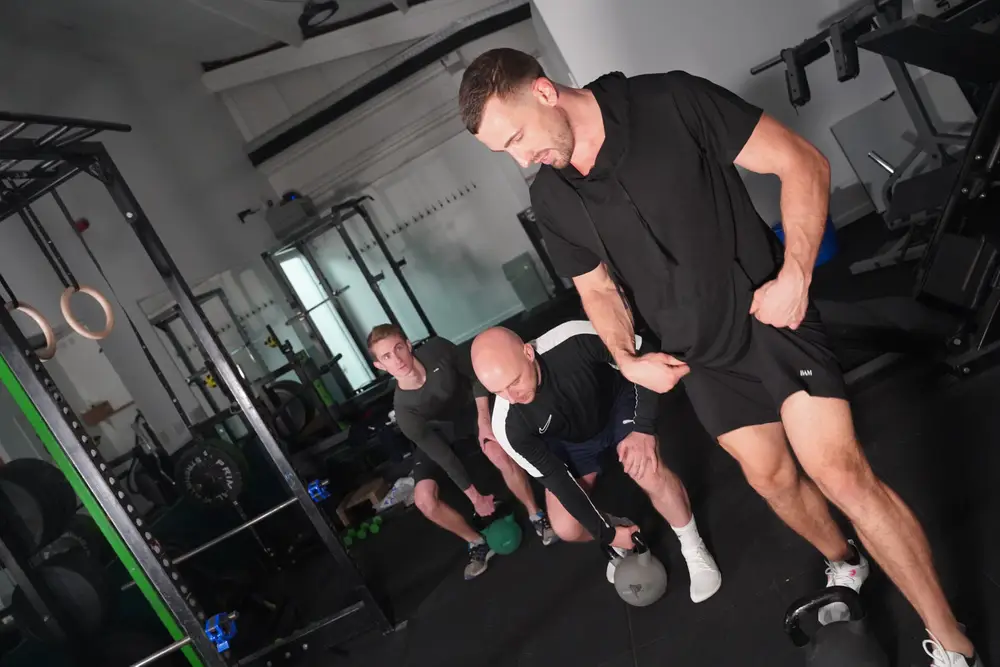
I coach one-to-one at Kelsey Kerridge Sports Complex and build programmes around what your back tolerates today, then expand that. Assessment first, then loading you can repeat. The first consultation is free.
Common questions
- Should I exercise with lower back pain?
- In most non-specific cases, yes — graded loading beats rest. Movement that stays within a tolerable range and progresses week to week is one of the best-evidenced approaches. Get red-flag symptoms assessed medically first.
- Is deadlifting bad for your back?
- No. Deadlifting badly, or jumping to loads you have not earned, is bad for your back. Coached hip hinging at an appropriate load is one of the most effective ways to build a back that tolerates daily life.
- How long until back pain improves with training?
- Many people feel meaningfully better within four to six weeks of consistent, sensibly progressed training, with continued improvement over three to six months as capacity builds.
- Can a personal trainer help with back pain?
- A coach can assess how you move, load the right patterns at the right dose and progress them safely. For diagnosed conditions or red-flag symptoms, see a physiotherapist or GP first — I work alongside that, not instead of it.
Written by Thomas Beeston, holistic strength coach at Strength by Design.
Apply this approach through in-person coaching in Cambridge or online coaching worldwide.