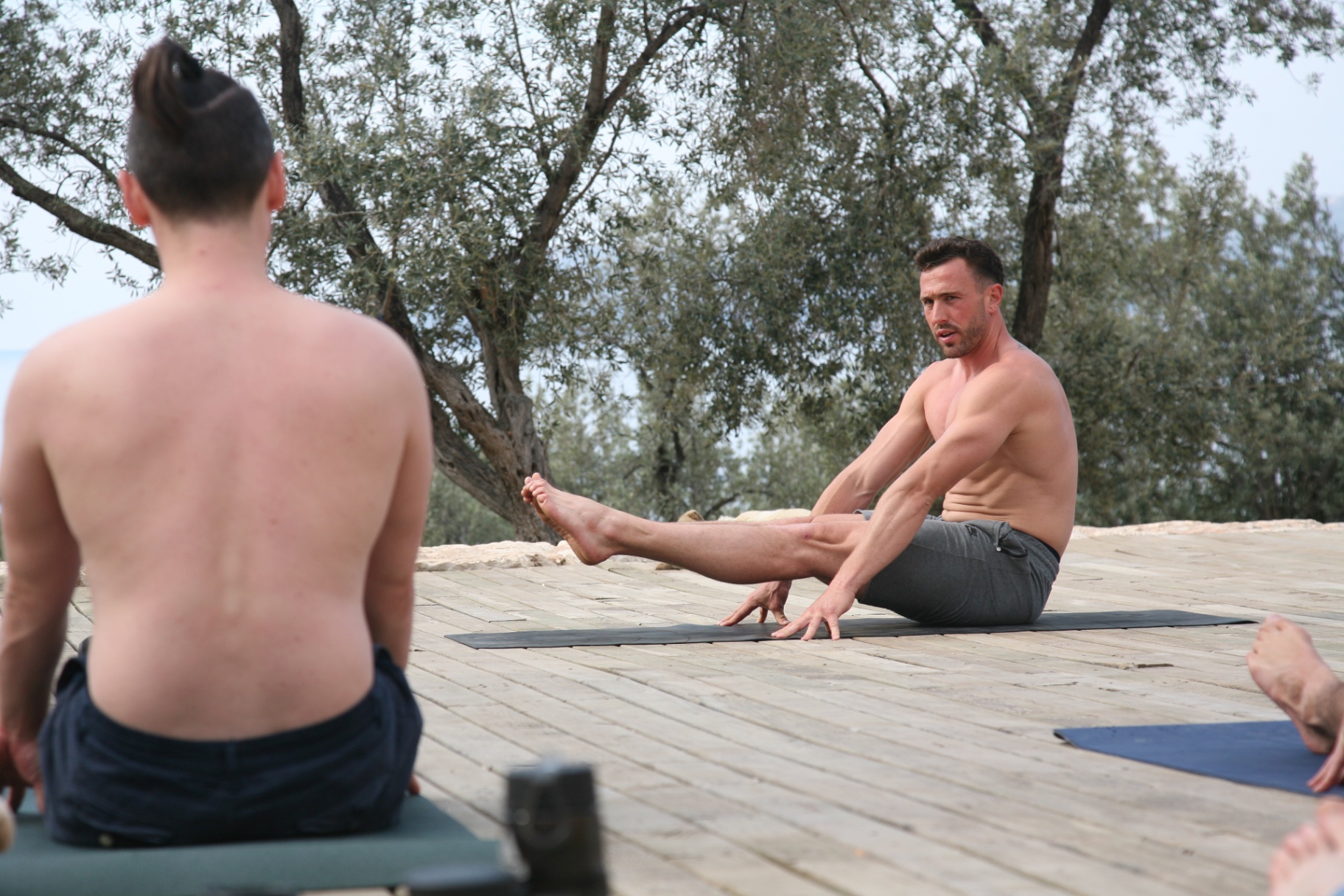
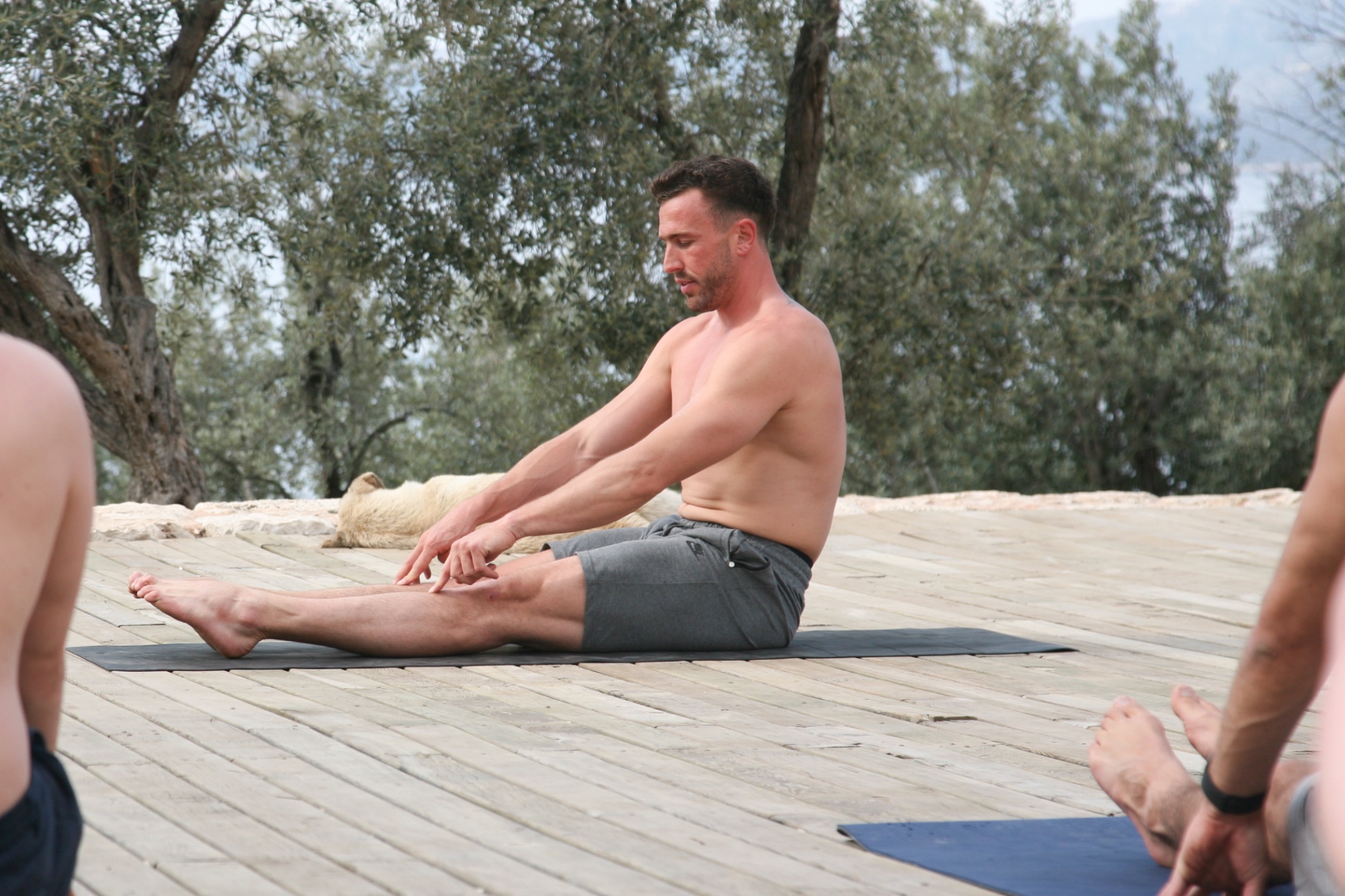
Sitting all day and cycling home stiffens the same three areas. Here's the short routine that undoes it.
Sitting for eight hours and then cycling home compresses the same three areas: hip flexors, thoracic spine and the front of the shoulder. Nothing dramatic happens on any single day, which is exactly why it creeps up on people.
Hips: open the front, then load it
A half-kneeling hip flexor stretch with the glute switched on beats a passive lunge every time. Thirty seconds a side, breathing out through the stretch, then finish with a set of glute bridges so the new range gets used rather than lost.
Thoracic spine: rotate and extend
Open-book rotations on your side, eight per side, slowly. Then extension over a foam roller or the edge of a chair. Most 'tight shoulders' are a stiff mid-back that has stopped contributing, so the shoulder does the work instead.
Shoulders: control, not stretch
Wall slides and banded pull-aparts train the shoulder blade to move properly. Two sets of ten of each, done slowly, will do more for a desk-bound shoulder than hanging off a doorframe.
The five-minute version
- Half-kneeling hip flexor stretch — 30 seconds each side
- Glute bridges — 10 reps
- Open-book rotations — 8 each side
- Thoracic extension over a roller or chair — 60 seconds
- Wall slides — 10 slow reps
Make it stick
Attach it to something you already do — the kettle boiling, the end of a call, before your evening shower. Routines that need willpower die in week two; routines that hang off an existing habit survive.
Common questions
- How long should a daily mobility routine take?
- Five to ten minutes done daily beats an hour done occasionally. Frequency matters more than duration for restoring range.
- Is stretching the same as mobility work?
- No. Stretching lengthens tissue passively; mobility work trains control through a range you can actually use under load.
Written by Thomas Beeston, holistic strength coach at Strength by Design.
Apply this approach through in-person coaching in Cambridge or online coaching worldwide.